Platform
464789+70%
Brand systems and AI team workflows.Hands-on from first sketch to live product.
hello@dashaaa.comPortfolio, EST 2026©
( Case study · 01 )
A website redesign that became a connected system for design, development, deployment, and reusable marketing infrastructure.
ClientSpread
RoleDesign · Development · Growth
Timeframe24 Mar to 30 May 2026 · ongoing iteration
TeamIndependent ownership across design, build, and deployment
( Outcome )
spread.ai redesigned and rebuilt as a custom HubSpot theme by one pair of hands, then turned into a production system that keeps improving after launch.
15 pagescustom pages designed, built, and live in 67 days
+8ppmobile engagement, 56.4% to 64.4% year over year
1,163views on four new product pages in the first quarter
Launch dates from repository history. Product adoption and mobile engagement from GA4; matched year-over-year period: 13 Jun to 23 Aug.
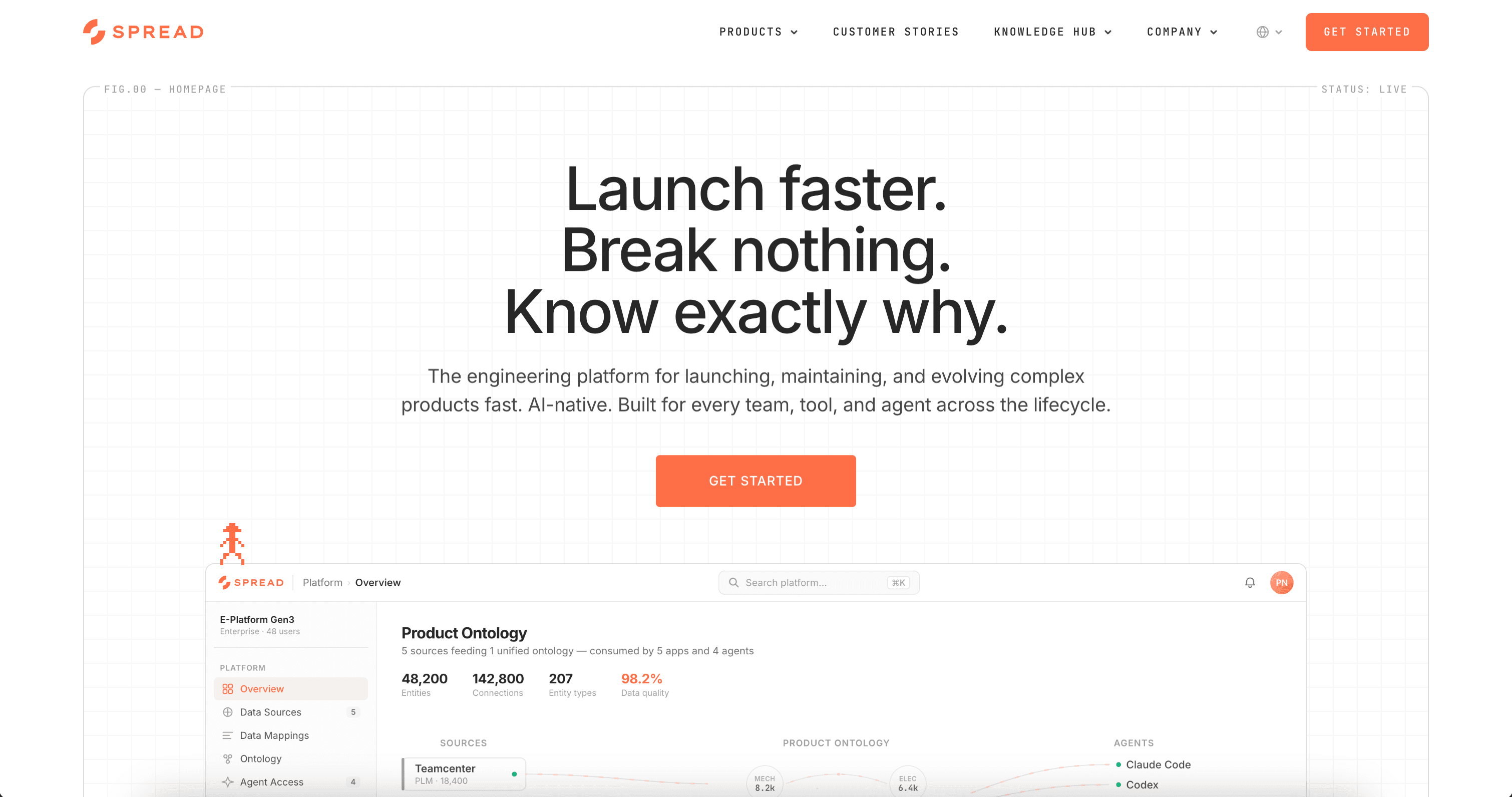
( Verified before / after )
Equal 88-day windows before and after the 30 May launch show growth across all four product pages.
GA4 page views · 3 Mar to 29 May compared with 30 May to 25 Aug 2026
Mobile engagement48.3% → 62.2%Pre-launch to post-launch, using the same 88-day windows
New product pages1,163 viewsFirst matched year-over-year quarter, with 25 to 35 seconds engaged per view
( Connected system )
Design, production, and evidence stay in one cycle, so each release can inform the next one.
Visual language and page priorities
Reusable components and templates
Custom HubSpot theme
Controlled production releases
GA4, Search Console, and Clarity
Evidence returns to the next release
( The situation )
The work expanded beyond a visual redesign. I needed to keep design direction, front-end implementation, HubSpot production, and deployment inside one connected workflow. That made the website both a brand expression and a system the team could continue using.
( My ownership )
The case is valuable because the work stayed connected from the first design decision through implementation and iteration.
Set the visual direction and responsive design system.
Built the website as a custom HubSpot theme.
Owned the work through deployment.
Connected agent-assisted production with the HubSpot CLI and API.
Currently translating the production system into agent-readable marketing guidance.
( How the system worked )
The chapters trace how the work moved from visual direction to a production system, then toward shared guidance for company agents.
( 01 · Design )
I translated the redesign into a responsive design system for the website. The goal was to keep the visual direction coherent from the first page through implementation in HubSpot.
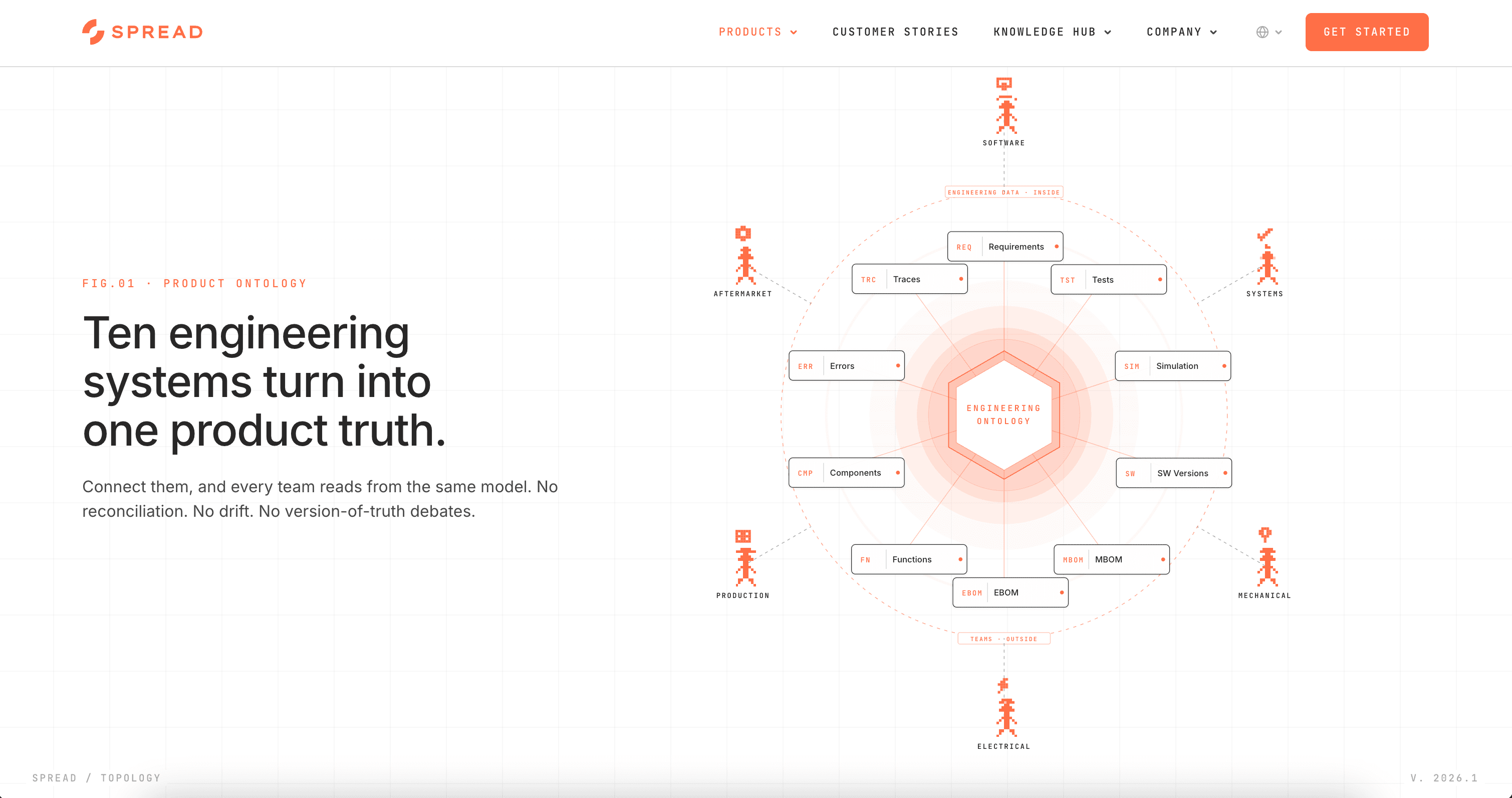
( 02 · Build )
I implemented the system as a custom HubSpot theme and owned the path through deployment. Building the work myself kept visual intent, responsive behavior, CMS structure, and production constraints inside one decision cycle.
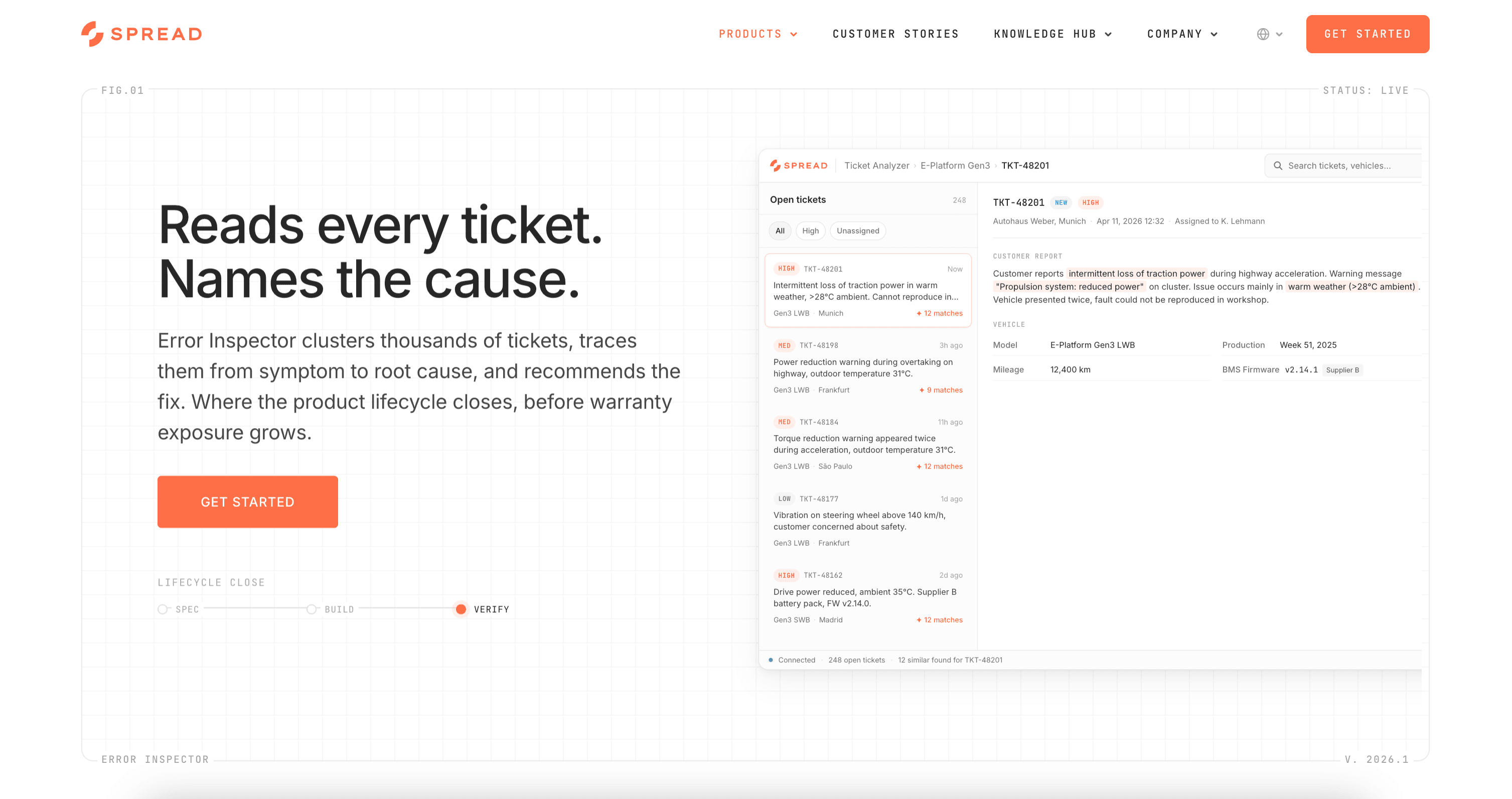
( 03 · Improve )
The workflow connects Agents with the HubSpot CLI and API, bringing production and publishing closer to the environment where design decisions are made.
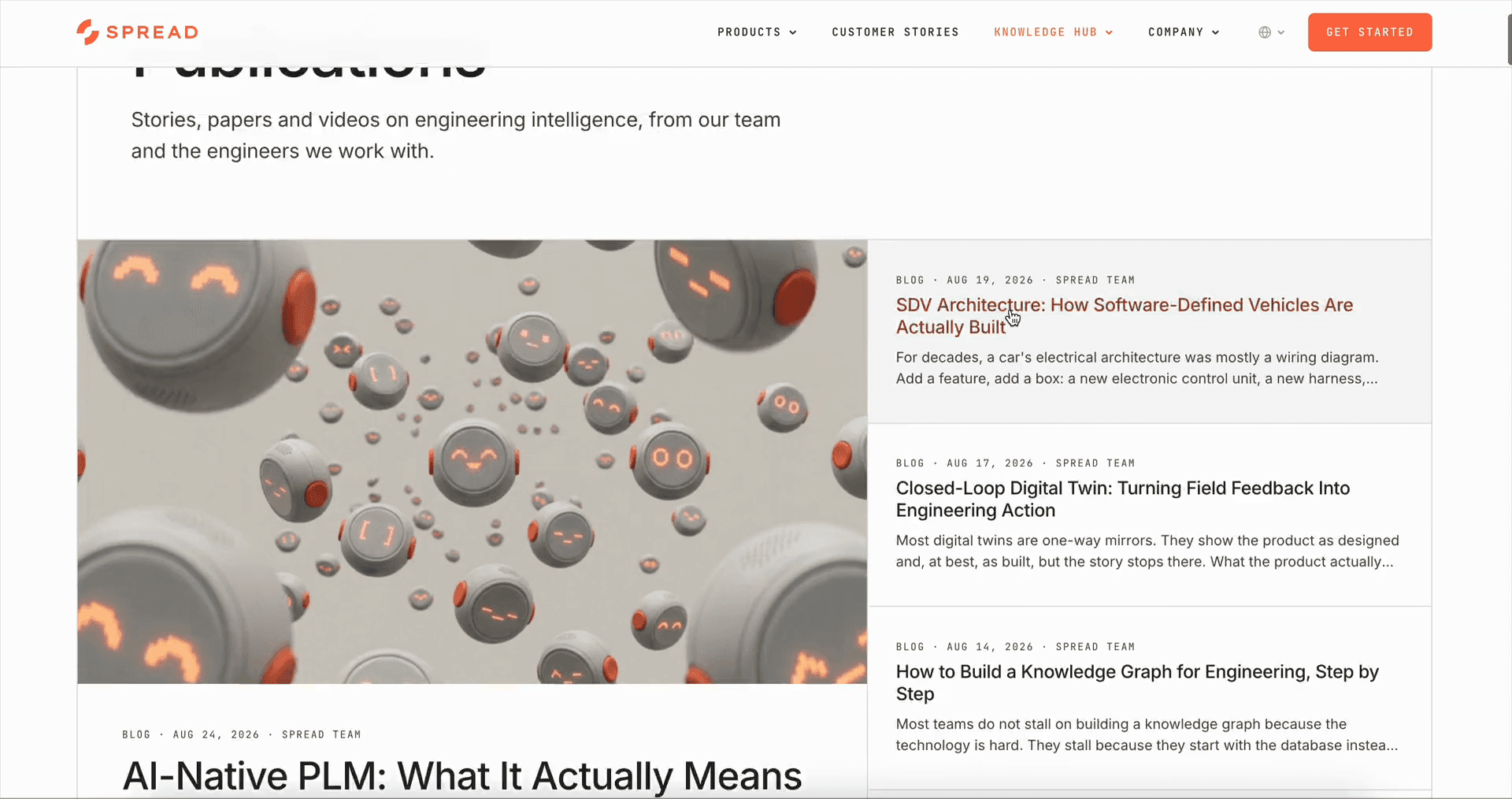
( Publishing system )
( 04 · Scale )
The production website is now becoming the reference implementation for a broader Marketing Design System. I am extracting its tokens, components, visual principles, and content patterns into structured guidance that company agents can read and apply across GTM work.
( What changed )
Owning the full cycle changed the quality of the decisions. Design could respond to implementation reality, development could preserve the visual system, and deployment could remain part of the same practice instead of becoming a separate handoff. An early comparison suggested large conversion gains, but a deeper audit showed that the result depended on an unreliable measurement window. I removed those claims and focused the case on evidence the data could support.